Friday, September 21, 2007

Bush makes the conservative case

President George W. Bush would be the first to admit that he's not The Great Communicator, a fact that has hurt his presidency and support for his policies at home and abroad. But every now and then, he gets his game on.

At yesterday's press conference, the President was large and in charge. He was relaxed and interjected humor and personal asides to the press. More significantly, he articulated several conservative principles, forcefully and unapologetically:

S-CHIP: "Democratic leaders in Congress want to put more power in the hands of government by expanding federal health care programs. Their S-CHIP plan is an incremental step toward the goal of government-run health care for every American.

"I have a different view. I believe the best approach is to put more power in the hands of individuals by empowering people and their doctors to make health care decisions that are right for them. Instead of expanding S-CHIP beyond its original purpose, we should return it to its original focus, and that is helping poor children, those who are most in need. And instead of encouraging people to drop private coverage in favor of government plans, we should work to make basic private health insurance affordable and accessible for all Americans.

"Their [the Democrat] vision is, expand the eligibility so that people making up to $80,000 will be eligible for this program. I believe this is a step toward federalization of health care. I know that their proposal is beyond the scope of the program, and that's why I'm going to veto the bill.

Taxes: "I believe the worst thing that can happen now is to allow the Congress to do that which they have said they want to do, which is to raise the taxes on people, and — because I think taking money out of the hands of investors and consumers and small business owners would weaken the economy.

"And so, as I say, I'm optimistic, but I would be pessimistic if I thought Congress was going to get their way. And they're not. They're not going to raise taxes."

Iran and Israel: "We're also talking to different finance ministers about how we can send a message to the Iranian government that the free world is not going to tolerate the development of know-how in how to build a [nuclear] weapon, or at least gain the ability to make a weapon.

"And the reason why is, is because it's very important for us to take the threats coming out of the mouth of the President of Iran very seriously. He's a person that … constantly talks about the use of force … on Israel, for example, and Israel is our very firm and strong ally."

Race relations and the Republican party: "My advice to whoever will be our [presidential] nominee is to reach out to the African American community, as well as other communities, because I believe that we've got a very strong record when it comes to empowerment, when it comes to education, or home ownership, or small business formation.

The economy: "The deficit, as a percent of GDP, is low. It's lower than the 30-year average. We have submitted a plan to balance the budget. We dealt with a recession, a terrorist attack and corporate scandals. And we did it by cutting taxes. The tax cuts worked. The economy recovered. People are working. Interest rates are low.

"I'm a supply-sider. I believe supply-side economics, when properly instituted, enables us to achieve certain objectives. One, people find work and there's hope in the economy. Two, that supply-side economics yields additional tax revenues. And if we're smart about how we manage the fiscal budget, it leads to balance, and that's what we have done. …We've submitted a plan that will enable this budget to become balanced by 2012, so long as Congress learns to set priorities. And we can balance the budget without raising taxes."

Entitlements: "I'm not going to give up on entitlement reform. They require … members of both parties to recognize we have a problem that ought to be solved now. …I thought it was time to come together a couple years ago, and that wasn't the political will in Congress. And I'm not so sure we're going to find it now, but I'm going to keep trying because, like the [former Federal Reserve] Chairman [Alan Greenspan], I understand that the biggest issue we've got with the deficit are those deficits inherent in these entitlement programs."

America's role in the world: "You'll find isolationists are those who say it's not our business what happens overseas; it doesn't matter if there's a free society in the heart of the Middle East, as far as our long-term security and peace. I just strongly reject that. I think it does matter a lot that the United States is working with other nations to promote liberty and freedom. I believe liberty is a change agent. Liberty can help hostile parts of the world become peaceful parts of the world.

Liberal hate speech:
Q: What is your reaction to the MoveOn.org ad that mocked General Petraeus as General "Betrayus," and said that he cooked the books on Iraq? And secondly, would you like to see Democrats, including presidential candidates, repudiate that ad?

THE PRESIDENT: I thought the ad was disgusting. I felt like the ad was an attack not only on General Petraeus, but on the U.S. military. And I was disappointed that not more leaders in the Democrat Party spoke out strongly against that kind of ad. And that leads me to come to this conclusion: that most Democrats are afraid of irritating a left-wing group like MoveOn.org — or more afraid of irritating them than they are of irritating the United States military. That was a sorry deal. It's one thing to attack me; it's another thing to attack somebody like General Petraeus.

Monday, September 17, 2007

"We love freedom, how 'bout you?!"


Conservatives don't quite have a knack for protest marches, like the left does.

On Saturday, I joined a group of around twenty conservative bloggers and activists at a counterdemonstration to the Women Against Military Madness (WAMM) anti-war protest march. Most estimates put the WAMM crowd at approximately 1500, which sounds about right to me. The marchers started at the Saint Paul Cathedral, then took a hard right turn (how apropos) onto Kellogg Avenue to the Xcel Energy Center, site of the 2008 Republican National Convention, and then doubled back to the State Capitol.


As in a football game in which the final score doesn't tell the full story, you can't judge the success or failure of this event by the lopsided turnout. I spoke with one WAMM marcher who was disappointed by the turnout on her side.


Both sides looked at Saturday's event at least in part as a practice run for next year's Republican National Convention, at which the left is gearing up to stage a major protest action — which some fear could turn violent. Conservative bloggers are referring to this group of protesters as "anarkids," a combination of "anarchy" and their ostensible twenty-something average age.

A pair of anti-war bicyclists challenge the conservative counterprotest at Saturday's WAMM march

But Saturday's event was for the most part peaceful. There were the two female bicyclists who had a pointed conversation with one of our group (see photo), the trio of military veterans against the war who were respectfully but firmly challenged by Navy vet Swiftee, and the tall, slim ranting guy with a shaved head whose verbal attack on Leo nearly drew an intervention from a mounted patrol of Saint Paul's finest. Then were the two women dressed from head to toe in red feathers.


The WAMM pre-march rally featured several speakers and the obilgatory series of rhyming chants ("No War For Oil," etc.). Rainbow gay pride kites and banners flew high, which was an ironic scene at a Catholic cathedral.

We were encouraged before the march began by the many motorists who honked, clapped, and waved at us as they drove by. The left definitely has the organizations, the coalitions, and the individuals who seem to be energized by the street theater of political protest en masse. The right is much more into working the political process by lobbying, campaigning, and writing. This day reminded me of the demonstrations outside the gubernatorial debate at the Fitzgerald Theatre last fall: a bunch of activists shouting at each other. Maybe next time I'll just wander around with my video camera like Eva Young did, in search of some interesting interviews. If I get around to it, I'll upload my video of the march itself for your viewing pleasure.


True North, the new conservative collaborative blog that sponsored the counterdemonstration, has aggregated much more coverage of the event. Don't miss the brief video of Swiftee sweetly taunting the marchers with "Bin Laden thanks you!"

Tuesday, September 11, 2007

Let us never forget 9/11/01...they haven't


On September 11, 2001, radical Islamic terrorists hijacked and crashed two passenger aircraft into the twin World Trade Center towers in New York City, a third aircraft into The Pentagon in Washington, D.C., and a fourth into a field near Shanksville, Pennsylvania, killing themselves and all aboard.

Obsession: Radical Islam's War Against the West is now on sale on DVD and via streaming video on the Obsession web site.

Wednesday, September 05, 2007

Sullivan endorses Romney

On last Saturday's Northern Alliance Radio Network show, "The Final Word" with King Banaian and Michael Brodkorb (broadcast on AM 1280 The Patriot), Brian Sullivan endorsed Mitt Romney for president.

Sullivan, the current Republican National Committeeman from Minnesota, ran against Tim Pawlenty for the Republican endorsement for governor in 2002, which culminated in a legendary, overnight ballot battle royale (ask me to tell you about it someday, it was my first state convention and I was a Sullivan delegate). He has maintained a behind-the-scenes profile since then, with occasional appearances on Almanac as the conservative voice on the political panel. In spite of his unsuccessful endorsement bid, Sullivan is still a favorite son among many Minnesota conservatives.

So Sullivan's endorsement carries some weight in this state, especially on the eve of Fred Thompson's presumed entry into the presidential race this week. Sullivan said that for him, it came down to two candidates, Romney and Thompson.

"I feel both are good conservatives," said Sullivan, "that would support the principles that I believe in, and I think that many conservatives in Minnesota believe in, it came down to who would I hire? Who is it that has actually accomplished something, made a difference, made progress against tough goals, it's Romney."

"In some ways I think that Thompson has become the Republican Party's [Barack] Obama, in the sense that not that much is known about him, he's clearly a very good speaker, he's an appealing personality, but his track record as a Senator, you could argue, isn't very strong...he's going to have to be able to be more than just a good candidate, but actually convince folks that he can lead the charge."

Interestingly, aside from his business experience, Sullivan's critics made much the same arguements in 2002 about Sullivan, who never held elected office.

Brodkorb reported that joining Sullivan in endorsing Romney this week were former Republican National Committeepersons Evie Axdahl, Jack Meeks, and Republican Party of Minnesota Treasurer Tony Sutton.

Thursday, August 23, 2007

Conservatives flex their muscle

Tom Scheck at Minnesota Public Radio's Polinaut, and more than a few Democrats I presume, are befuddled at Gov. Tim Pawlenty's signals over the weekend that a gas tax increase may not be such a sure thing after all. In an e-mail to supporters, the governor's political director, Michael Krueger said, "the Governor has made it clear to legislative leaders that he would like to see this gas tax increase as only temporary and offset by an income tax cut."

"So what changed," asks Scheck, "between Pawlenty's statement on August 7th ("The gas tax has never been popular but we have needs that have to be addressed") and today? Did he get too far from his base? Is he poll watching?"

That got me wondering about 100.3 KTLK-FM personality Jason Lewis's August 10 (note the timing) e-mail blast to his Tax Cut Coalition. Perhaps we caught a glimpse of what can happen when conservatives come together to flex their political muscle:
Dear TCC Member:

Just when you thought it was safe to go back to work again...

The aftermath of the I35W bridge collapse seems to only compound a very sad event. The idea that some politicians would use such a tragedy to advance their own agenda is more than unseemly. Unfortunately, raising taxes--and not re-prioritizing state spending--is gaining traction and too few in the political arena are opposing such a transparent notion.

The upcoming special session is now turning into a feeding frenzy with almost every conceivable spending proposal item on the agenda--that is, unless we stop it. A state biennial budget that has had two back-to-back increases of 12.4% and 9.6% respectively doesn't have a spending problem. A $34.5 billion general fund, which has doubled since 1995 and gone up 30% just since 2002 isn't short of taxpayer generosity. What happened to that surplus?

If we are truly committed to roads and bridges then our elected leaders need to revisit our state highway funding formula which short changes the most congested areas; they need to rethink diverting state and federal dollars to billion dollar light rail projects; and members of Congress need to stop the earmarks in transportation bills that have little to do with building and maintaining roads. Period.

Please tell your state Representative and Senator as well as the Governor that you will not support an increase in the gas tax (or any other tax) unless it is completely offset with a reduction in the state's income tax burden for those paying the way. [Emphasis mine. —M.A.] This would have the effect of spending less on non-essential items and devoting more resources to the real infrastructure the politicians say they care about.

It isn't a tax cut (they can't say we're not willing to compromise) but it is the only alternative acceptable to Minnesotans who make the economy go. (And a few letters to the editor might not be a bad idea either.)

Thank you in advance for your support.

Jason Lewis
Host, 4 - 7pm
FM Newstalk 100.3 KTLK

P.S. Don't forget to get your Tax Cut Coalition T-Shirt at the KTLK booth during the Minnesota State Fair.

Monday, August 20, 2007

Bigger subsidy: roads or mass transit?

To hear the Strib tell it, only drivers of single-passenger cars benefit from roads (Editorial: "Bipartisanship helps get transport funds," Saturday, August 18, 2007):
Our fundamental transportation problem, as a nation and as a metropolitan region, is that drivers don't pay anything close to the full cost of driving. Thirty-three percent of road and bridge costs in Minnesota, for example, are borne by general property taxpayers, not by the buyers of gasoline, license tabs or other car-related expenses. Indeed, if all the externalities associated with excessive driving were calculated -- from emergency rooms to air pollution, not to mention more contentious factors, like foreign wars -- the sum would be staggering and would compel us to reconsider our daily travel habits.

They forgot to include "manmade climate change" and lack of universal health care insurance to this list. So much for the "gatekeepers" at the Strib.

The Strib seems to suggest that general property taxpayers don't benefit from good roads, so they are subsidizing those evil automobile drivers. Even if we accept this canard as truth, intellectual honesty would demand that we acknowledge those heavily-taxed general property taxpayers who also drive a car certainly benefit from good roads and bridges. Further, anyone who receives postal mail, who buys anything at a retail store, who eats food at a restaurant or purchased at a farmer's market, takes delivery of an online purchase, receives home delivery of the Star Tribune, checks out a book from the Minneapolis Central Library, rides a Metro Transit bus or school bus, or takes a taxi all benefit from good roads and bridges.

Conversely, none of these groups benefit from light rail trains. Would the Legislature please grant an exemption to these oppressively-taxed groups from propping up economically unsustainable light rail trains, which benefit only a small percentage of the population to the detriment of the roads and bridges that we all depend on?

Teenage Republicans to hear about communism

Sen. Rudy BoschwitzThis Friday, August 24th at 6:00 pm, the Teenage Republicans of Minnesota (TAR) will hold a state meeting at the Edina Community Center to talk about the pitfalls of communism.

Ananh Saenvilay spent most of his life under a communist government in Laos. He witnessed first hand how communist governments strip away the rights and freedoms we Americans take for granted. To protect our freedoms, Mr. Saenvilay has become active in the Lao American Republicans, and in 2007 served as one of the LAR delegates to our GOP State central.

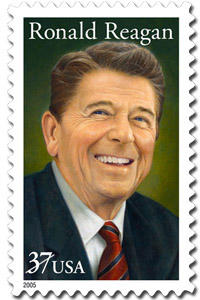
Senator Rudy Boschwitz will speak about his service with President Ronald Reagan. He will talk about how President Reagan had a clear goal of stopping the rapid spread of communism and restoring worldwide freedom through democracy and individual rights. Few Presidents have made an impact on this world as President Reagan did. Senator Boschwitz had a front row seat during Reagan's tenure.

The new Minnesota State party deputy chair, Dorothy Fleming will talk about the status of the state party and how they need us TARs more than ever.

Tommy Tjornholm, a TAR from Minnetonka, Minn., will tell us what he learned while representing Minnesota TARs at the National Teenage Republican Leadership Conference in Washington, D.C.

GOP elected officials have also been invited. Expected to attend are Rep. Neil Peterson (R-Bloomington), Rep. Tom Emmer (R-Delano), and Senator David Hann (R-Eden Prairie). Many BPOU leaders are also expected to attend.

For further information and RSVP: Alex Friedman, A.Friedman1 at gmail dot com. The event is free and open to the public.

Friday, August 17, 2007

That giant sucking sound

"Politics is not the art of the possible. It consists of choosing between the disastrous and the unpalatable." —John Kenneth Galbraith

With Governor Pawlenty opening the door to light rail on the I-35W bridge replacement, and a gas tax increase to pay for it, the affair is already teetering between the disastrous and the unpalatable.

To paraphrase Ross Perot, that giant sucking sound you hear is more money being vacuumed from your wallet. From the Taxpayers League of Minnesota:
As [Taxpayers League of Minnesota president] Phil Krinkie said on MPR on Wednesday, what will fastracking Northstar [commuter rail between Saint Cloud and Minneapolis] — which is projected to handle 5000 trips a day — do to relieve congestion on a bridge that carried upwards of 200,000 vehicles a day? And, with subsidies for Northstar projected to run anywhere from $5-$7 per rider (on the low end) to $15-$18 per rider (on the high end), where will future transportation spending be focused? Not where we need it, that’s for sure.

If you really want to talk about transit subsidies here’s another number for you to throw at your neighbor the next time he opines as to where our priorities should be: per Minnesota state statute, Metro Transit must achieve of farebox recovery rate of between 33-34%. So every dollar a bus or train rider puts in the till, $2 is coming out of your pocket. Pretty slick how that works, huh?

Are any of our elected officials planning on standing up for the automobile commuter, freight carriers, and taxpayers against these runaway trains?

Thursday, August 16, 2007

Mark Buesgens: not so fast!!


Kudos to Minnesota Rep. Mark Buesgens (R-Jordan) for his commentary in the Strib, "Let's be wary of raising taxes during a period of high emotion," in which he cautions against a hastily-called special session of the Legislature to pass a hastily-crafted gas tax bill to pay for replacing the collapsed 35W bridge:
A special session would not be a magic wand that would suddenly cure all the woes of our neglected infrastructure. Raising the gas tax in September would not bring in huge amounts of revenue before the Legislature is set to reconvene in February. Of course, immediate cash is necessary, and the governor has emergency powers to allocate the necessary revenue from any of the numerous reserve funds that the state has socked away for just such incidents.

The Strib reported that Sen. Ann Rest (DFL-New Hope), Sen. Rod Skoe (DFL-Clearbrook), and U.S. Rep. Betty McCollum (D-MN 4) are all questioning the "frenzied rush to replace the bridge [McCollum's words]." Of course, no one is questioning the frenzied rush to raise taxes.

Like a good homeowner's insurance policy, the federal government will fund the replacement of the bridge with an equivalent bridge, with up-to-date safety, durability, and traffic standards. The Dems want to add light rail, and need more time to come up with funding, conduct environmental studies, and engineer a new bridge that would support light rail. So they're using fear to put the brakes on getting metro area drivers off the post-collapse detours.

Considering the circumstances, I have no doubt that the new 35W bridge is going to be the safest, longest lasting bridge built since the Interstate system was created. Frenzied rush, indeed.

Wednesday, August 15, 2007

"The Ethanol Scam"

For a scathing repudiation of the ethanol scam, check out "The Ethanol Scam: One of America's Biggest Political Boondoggles," by Jeff Goodell, Rolling Stone magazine, Issue 1032.
Ethanol doesn't burn cleaner than gasoline, nor is it cheaper. Our current ethanol production represents only 3.5 percent of our gasoline consumption -- yet it consumes twenty percent of the entire U.S. corn crop, causing the price of corn to double in the last two years and raising the threat of hunger in the Third World...

So why bother? Because the whole point of corn ethanol is not to solve America's energy crisis, but to generate one of the great political boondoggles of our time. Corn is already the most subsidized crop in America, raking in a total of $51 billion in federal handouts between 1995 and 2005 -- twice as much as wheat subsidies and four times as much as soybeans. Ethanol itself is propped up by hefty subsidies, including a fifty-one-cent-per-gallon tax allowance for refiners. And a study by the International Institute for Sustainable Development found that ethanol subsidies amount to as much as $1.38 per gallon -- about half of ethanol's wholesale market price.

The article goes on to describe ethanol's technical shortcomings, political sell-outs to big ag, and even how biofuels could be "done right," if not for the political interests currently pushing corn ethanol. Goodell is no right-wing ideologue: he is not opposed to biofuels per se, and is a believer in man-made global warming.

Even more interesting than the article itself is a letter to the editor from ethanol proponent Bob Dinneen of the Renewable Fuels Association, and author Goodell's response, which includes several web links for further debate.

How refreshing in the light of the current political, government, corporate public relations, and mass media snow job promoting the burning of food for fuel.