Note to aspiring bloggers: I have finally learned my lesson about liveblogging. The two things you absolutely cannot take for granted at a liveblog venue: Internet access and power. Without both of course, you are dead in the water. I had intended for this to be a liveblog of Wednesday's Minnesota GOP activists' meeting of the minds, but a, shall we say, cluster of circumstances conspired first to delay then put an abrupt end to that idea.
"MN GOP: Where Do We Go From Here?" was a panel discussion about the future of the Republican Party of Minnesota, in the aftermath of the 2012 elections. The party has been devastated by overwhelming election defeats, financial mismanagement, scandal, infighting among its various factions, and an image of exclusion — and that's aside from the constant attacks from the Democrat party and their allies in the media, Hollywood, and political action committees.
I arrived at the
Blue Fox Bar and Grill in Arden Hills (located on the corner of Lexington Avenue and, ironically, Red Fox Road) just after the scheduled 6:00 pm start to the pre-event social, only to find the parking lot full to overflowing into the neighboring businesses. It was even more crowded inside the bar, where easily over 200 persons packed the bar, tables, and booths, making it difficult for the waitresses to make their rounds, laden with food and drink.
This may have been what Samuel Adams called the "animating contest of freedom" looked like. People from all walks of life, gathered in a pub, debating the questions of liberty, at times listening intently, at other times loudly objecting or talking amongst themselves, then applauding an eloquently-spoken point.
The panel was moderated by
blogger and talk radio host
Mitch Berg and Hennepin County Commissioner
Jeff Johnson. Announced panelist Sen.
Dave Thompson (R-Lakeville) was unable to attend. Fortunately for the discussion, commentator and activist
Erin Haust was able to sit in for Thompson.
The moderators posed several questions to the panel, some submitted by audience members on index cards. Several recurring themes emerged:
Is the Minnesota GOP the party of addition and multiplication, or division and subtraction?
This line from
Kurt Bills's concession speech sums up what the panel identified as the Minnesota GOP's most pressing problems. The various factions within the party — so-called Ron Paul libertarians, social conservatives, TEA Party fiscal conservatives, moderates, and the party establishment — are eating themselves alive and killing the party from within. Instead, Republicans should focus on what they agree on, get elected, then debate the rest. This internal feuding is wasting energy, turning off the grassroots, and discouraging everyone else from joining the party. Party activists should remind themselves that their common opponent is the DFL.
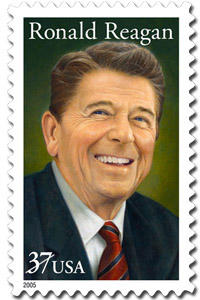
The person who agrees with you 80 percent of the time is a friend and an ally — not a 20 percent traitor. —Ronald Reagan
The Minnesota GOP is attempting to fight a twenty-first century opponent with stone knives and bear skins.
There is a black-and-white video of Ronald Reagan from the 1960s giving a tour of the "modern" political campaign phone bank. (I couldn't find it on YouTube, if you do, please send me the link.) The Gipper proudly explains the modern techniques of compiling neatly-typed telephone number lists of Republicans by precinct, and how the volunteers call everyone on the lists to remind them to vote Republican on election day.
The problem for Republicans is, this was how Republicans contacted voters in 2012, a half century later.
Social media maven
Erin Haust sounded a high-tech wake-up call for Minnesota Republicans. She explained how Democrats are light years ahead of Republicans in data analytics and social media. She urged BPOU activists to work together to create "viral" videos on Facebook and YouTube, advertise on Facebook "now" for 2016 (she remarked that it may already be too late for 2014), use
memes and
infographics, and get regular articles in
local newspapers and online websites like
Patch.com.
Haust mentioned
WeAreChange.org and
Project Veritas as examples of the effective use of video for conservative messaging:
Republican campaign strategist
Andy Parrish recommended the book
The Blueprint: How the Democrats Won Colorado (and Why Republicans Everywhere Should Care), reviewed in 2010 on
RedState. It's an eye-opening account of how liberal-progressives used a privately-funded political machine to work on projects from "policy generation to leadership recruiting, coalition building to grassroots activation...dozens of 501(c)(3), 501(c)(4) and 527 organizations...worked in perfect harmony to take down the Republican establishment and install left-leaning policymakers in its place." After reading it, Minnesota conservatives will better understand what has been happening here in Minnesota, and how it might fight back.
The Minnesota GOP needs to appeal to minority communities and independents by stressing our common values.
Walter Hudson, commentator and member of the
Minority Liberty Alliance, explained how Minnesota Republicans should reach out to minority communities by first listening to what's important to them, and then explain why conservatism offers better answers than liberal-progressives.
Dan Severson, president of the organization, and 2012 U.S Senate candidate
Kurt Bills are already making inroads in this way. Later, Hudson recalled that for most of the country's history, people immigrated to the United States to escape the tyranny of their homelands, with no guarantee of anything except precious freedom. This is a message that resonates with the Hmong who told of their fight against the Communists for the CIA at a recent Minority Liberty Alliance meeting.
Politics in Minnesota creator
Sarah Janecek, who proclaimed herself the "only moderate Republican in the room," offered a similar approach that she has used to talk to independents: instead of focusing on labels like conservative vs. liberal, talk to people about opportunity, reframe the message based on values, and why conservative ideas are superior.
The Minnesota GOP needs to get its house in order and figure out how to win elections in the twenty-first century.
Parrish proclaimed that The Republican Party of Minnesota is "a disaster." He said that it's time for the RPM to declare bankruptcy, start over, give candidates and
BPOUs the tools to run an effective campaign, including effective voter ID, microtargeting precincts, messaging.
Haust said that the party needs to recognize that Democrats are engaged in a perpetual campaign, and to abandon its "campaign season" mentality. She said that activists need to be engaging friends and neighbors continually, as liberal-progressives have been doing for years.
Mark Westpfahl, chairman of Senate District 2 Republicans, agreed, adding that Republicans need to be more active in the community between elections, and run for local offices. He added that party activists also need to trust each other and cooperate within and between BPOUs.
Hudson said that the party needs to understand that winning campaigns and winning ideology (public policy, public opinion) are two different efforts, and to conduct them independently instead of as one process. He added that conservatives don't need to wait for the state party to tell them what to do, pointing out that this evening was not organized by the party. (It was the brainchild of
Steve Hensley of
Real Capitol View.)
Janecek asked what did Minnesotans get when Republicans controlled the state House and Senate (for the second time in her lifetime, she added)? Government grew, two failed constitutional amendments, financial mismanagement, and scandal (and a less than optimal response to it by elected leadership). Republicans instead need to deliver on its promises of smaller government, fiscal restraint, and economic growth.
Janecek and Stebbins claimed that Ron Paul won young voters by leaving social issues out of his campaign, and focusing instead on economic issues.
The last question asked panelists, what do Republicans agree on?
Ron Paul Minnesota 2012 chair
Marianne Stebbins: Economic freedom, fiscal conservatism, school choice.
Westpfahl: Government is more obtrusive in people's lives than it should be.
Severson: Our rights to life, liberty, and the pursuit of happiness are given by God; government with the consent of the governed.
Janecek: Focus on the economic issues, and we win the majority.
By the end of the evening, Hudson had so eloquently espoused various conservative principles that one of the panelists had to admit, "Nobody [on the panel] wants to follow Walter."
Not surprisingly, the party's problems were not solved that night, but perhaps getting them aired out was a critical first step.