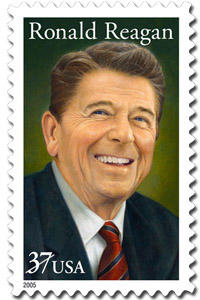
"The entire country may disagree with me, but I don't understand the necessity for patriotism," [The Dixie Chicks singer Natalie] Maines resumes, through gritted teeth. "Why do you have to be a patriot? About what? This land is our land? Why? You can like where you live and like your life, but as for loving the whole country... I don't see why people care about patriotism."
— Daily Telegraph, "How the Chicks survived their scrap with Bush"
POLITICS
Friday, June 16, 2006
Monday, June 12, 2006
Zarqawi: renegade
Congratulations to coalition forces, whose combined tenacity, intel, and ferocious tactical precison led to the death of Abu Musab al-Zarqawi last week.
"Renegade" (Tommy Shaw)
Oh Mama
I'm in fear for my life
From the long arm of the law
Law man has put an end to my running
And I'm so far from my home
The jig is up, the news is out
They finally found me
The renegade who had it made
Retrieved for a bounty
Never more to go astray
This'll be the end today
Of the wanted man
Oh Mama
I've been years on the lam
And had a high price on my head
Lawman said 'Get him dead or alive'
And it's for sure he'll see me dead
Dear Mama
I can hear you cryin'
You're so scared and all alone
Hangman is comin' down from the gallows
And I don't have very long
The jig is up, the news is out
They finally found me
The renegade who had it made
Retrieved for a bounty
Never more to go astray
This'll be the end today
Of the wanted man
WAR ON TERROR
Tuesday, June 06, 2006
David Johnson for House 43B
At a special endorsing convention last night, David Johnson received the Republican endorsement for Minnesota House District 43B. Also vying for the endorsement were activist James Seim and Jeff Koblick, husband of Hennepin County Commissioner Linda Koblick.
POLITICS
POLITICS
Thursday, June 01, 2006
Paying for Bonoff's "vision"
Sen. Terri Bonoff (D-Minnetonka) was one of a handful of Hennepin County state Senators who voted in favor of granting Hennepin County an exemption from asking voter permission to levy a sales tax to help pay for the Minnesota Twins professional baseball stadium. West metro legislators recently shared their views on this controversial bill in this week's Sun Newspapers:
Rep. Steve Smith (R-Mound): "The Twins stadium bill was premised upon the promise to benefit the many and be paid for by the few — in this case the taxpayers of one county, Hennepin. This was wrong. Minnesotans have been extended the right to vote on local sales tax impositions, and taking away that right to vote so as to promote subsidies for a private business was wrong."
Sen. Gen Olson (R-Minnetrista): "I felt strongly that the sales tax is a state tax," she said, adding that if the tax was to be Hennepin County's burden, voters should have been able to vote on a referendum.
Rep. Ron Abrams (R-Minnetonka): "I thought it was unfair to single out Hennepin County to pay the tax."
Sen. Bonoff: "During the campaign I made it clear that I was a supporter of the stadiums. I have a vision of what our cities are going to be. In order to be a thriving metropolis we need the Twins."
Although denied a referendum on the $1 billion sales tax, Senate District 43 voters will have a chance to express whether they share Sen. Bonoff's vision of public subsidies for private business, when Bonoff runs for reelection this November.
POLITICS
Tuesday, May 30, 2006
Memorial Day photoblog
"Never in the history of the world has any soldier sacrificed more for the freedom and liberty of total strangers than the American soldier. And, our soldiers don't just give freedom abroad, they preserve it for us here at home."
—Sen. Zell Miller (D-Georgia), address to the 2004 Republican National Convention

Armed Forces Day
Salute to Our Military
May 20, 2006
Grace Church, Eden Prairie

Japanese American Veterans of Minnesota
Memorial Day Observance
May 22, 2006
Fort Snelling National Cemetery

American Legion Post 118
Memorial Day Observance
May 29, 2006
Heritage Park, Wayzata
MILITARY MEMORIAL DAY
Thursday, May 25, 2006
Minnesota's Mr. Right to return home
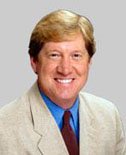
"There's no place like home, there's no place like home..." He'll be back just in time to rile up the conservative base for the fall elections, on 100.3 KTLK-FM The FM News Talk. We hope the mics and studio webcam will be turned on to record Jason's first meeting with Brian Lambert.
POLITICS TALK RADIO
Terri Bonoff: Twins stadium tax, whether you want it or not
 In spite of portraying herself as a moderate, Senate District 43's Sen. Terri Bonoff (DFL-Minnetonka) showed that she can raise taxes and spend with the best of them during this session's stadium votes.
The Minnesota Senate, on a 34-32 vote (HF 2480), granted Hennepin County an exemption from the state law that requires local units of government to ask for voter permission to levy a local option sales tax. Hennepin County plans to levy a 0.15 percent sales tax to subsidize the Minnesota Twins baseball stadium and fund "political cover" projects such as youth sports and libraries in Hennepin County.
A little talked-about provision of the bill also grants Anoka County permission to levy up to a 0.75 percent local option sales tax, also without a referendum, to build a retractable roof Vikings stadium. This provision is contingent on legislative approval of the development and financing agreement for the stadium:
Sec. 20. VIKINGS STADIUM PROPOSAL.If any one of the 34 senators had voted no, these tax increases would not have passed. Sen. Bonoff was one of only three suburban and two Minneapolis senators from Hennepin County to help pass the referendum-free tax increase. Five DFL senators, including Senate Taxes Committee chairman Sen. Larry Pogemiller (DFL-Minneapolis), joined their Republican Hennepin County colleages in voting against the referendum exemption.
Representatives of Anoka County and the Minnesota Vikings shall negotiate an agreement for the development and financing of a stadium that meets the programmatic requirements of the National Football League, and that has a retractable roof, to be located in the city of Blaine. A report on the agreement must be presented to the legislature by January 15, 2007.
Sec. 21. ANOKA COUNTY SALES AND USE TAX AUTHORIZATION.
Subdivision 1. Authorization. To provide local government revenue to finance a football stadium for the Minnesota Vikings, located in the city of Blaine, Anoka County may impose a general sales and use tax on sales subject to taxation under Minnesota Statutes, chapter 297A, within its jurisdiction of not more than 0.75 percent. The tax imposed under this section must terminate 30 days after the county board determines that sufficient revenues have been received from the tax and other sources to retire or redeem the bonds issued to pay for the stadium...
Subd. 3. Exemption from local approval requirement. This section is not subject to the local approval requirement under Minnesota Statutes, section 645.021.
Hennepin County senators voting NO:
Bill Belanger (R-Bloomington)
Linda Berglin (DFL-Minneapolis)
Scott Dibble (DFL-Minneapolis)
Chris Gerlach (R-Apple Valley)
David Hann (R-Eden Prairie)
Warren Limmer (R-Maple Grove)
Geoff Michel (R-Edina)
Gen Olson (R-Minnetrista)
Larry Pogemiller (DFL-Minneapolis)
Jane Ranum (DFL-Minneapolis)
Ann Rest (DFL-New Hope)
Hennepin County senators voting YES:
Terri Bonoff (DFL-Minnetonka)
Linda Higgins (DFL-Minneapolis)
Steve Kelley (DFL-Hopkins)
Linda Scheid (DFL-Brooklyn Park)
Wes Skoglund (DFL-Minneapolis)
When asked to state her position on the stadiums at the League of Women Voters forum last fall, Bonoff said "not now" regarding the Vikings stadium, but in addition to the final stadium bill, Bonoff also voted in favor of an earlier version that funded the Twins, Vikings, and University of Minnesota stadiums with a 0.5 percent, seven-county metro area tax and a 13 percent wholesale sports memorabilia tax.
By voting to increase taxes without a referendum to subsidize professional sports, Sen. Bonoff showed how her beliefs differ from that of most Minnesotans (according to recent polls), and from fiscal conservatives in the west metro.
POLITICS
Wednesday, May 17, 2006
Bob Collins: I'm growing to hate this word: "blogosphere"
Check out Bob Collins's interesting reflections on the evolving role of blogs in politics. Collins is the senior editor for online news at Minnesota Public Radio and coordinated MPR's political coverage in the 1990s. Collins also blogs as Polinaut, and he has piped up in this blog's comment section.
POLITICS
One of the real tensions right now in the political universe is a clash of cultures between people whose goal it is to control the message (aided and abetted by an only-too-willing media, by the way) and a medium that cannot be controlled.What Collins does not explain very well is why he is growing to hate the word "blogosphere." It sounds to me that it's not the blogosphere itself that he hates, it's just the term "blogosphere."
I know that many politicians and their campaigns read blogs, so chew on this idea: this week, visit your favorite blog, and ENGAGE. Visit the ones you don't like, the ones that are saying bad things about you (go to the source) and ENGAGE. Just to see what happens.
POLITICS
Monday, May 15, 2006
Stadium lobbying isolates politicians from reality
By John Marty
Two recent polls show that there are different realities in Minnesota stadium politics:
AT THE CAPITOL, Governor Pawlenty and many legislators have made stadium funding a top priority. Most legislators sincerely believe that a majority of their constituents support the stadium subsidies.
Legislators of both parties are now proudly describing stadium funding, along with the bonding bill and eminent domain legislation as the main priorities they plan to accomplish this session.
AROUND MINNESOTA, people oppose using taxpayer money to pay for any professional sports stadium by more than two-to-one (65% - 30%, according to a May 11 poll for KSTP by SurveyUSA.) While more people thought the Twins needed a new stadium than the Vikings or Gophers, it was still only 35% of the public that thought they needed one, according to a May 14 Star Tribune/Minnesota Poll. And, when asked about paying for it, 68% of the public opposed the use of public money, with 59% of them STRONGLY opposed (Minnesota Poll.) Despite years of expensive advertising and PR campaigns on behalf of public subsidies, the voters remain strongly opposed.
Why is the "reality" at the capitol so far removed from the attitudes of the public? After a decade of intensive lobbying, PR efforts, and campaign contributions by team owners and their lobbyists, the Governor and legislative leaders have come to believe in a new reality.
These political leaders are living in a bubble in which they end up talking to lobbyists for the team owners and their allies more than to their constituents.
Furthermore, these legislators believe the "astroturf" (phony "grassroots") lobbying campaign organized by highly-paid consultants and PR firms actually reflects public opinion.
These public officials are so confident they are doing what the public wants that they dismiss the two new polls as unbelievable. Politicians who are usually eager to do what polls show to be popular, reject these polls because they don't mesh with their "reality."
Legislators from greater Minnesota have been persuaded by the stadium lobby that the vast majority of their constituents support the subsidy bills because it is not their constituents that will be stuck with the taxes for a stadium, but people in other communities. Yet the KSTP/SurveyUSA poll shows that people outside of the metro area oppose the taxpayer subsidies just as people in the metro area do. It doesn't occur to these lawmakers that their constituents understand the unfairness of the tax and don't think their fellow citizens in Hennepin or Anoka county should be stuck with it either.
Likewise, the stadium lobby has persuaded many politicians that the dreaded stadium issue will go away if they give in and provide the subsidies demanded. These politicians don't realize that as soon as these stadiums are funded, new demands will crop up. They don't see the writing on the wall about the Timberwolves stadium wishes when team owner Glen Taylor tells the Star Tribune, "I was in politics... the last thing we need is [a Target Center funding debate] NOW. (emphasis added)"
In previous years, the Governor and legislators understood that these taxpayer subsidies were unpopular with the public, so public officials claimed that they did not consider stadiums to be a priority, only an option that would be nice to do. Now, Governor Pawlenty and legislative leaders have given up any pretense of that, and will freely admit that although the state won't be doing anything significant to address our education or healthcare or transportation needs this session, they want to make sure we fund at least two stadiums.
To the credit of Minnesota voters, they have held fast to their principled opposition to stadium subsidies despite the expensive stadium PR campaigns. Nevertheless, the stadium lobby has shown that with enough money, they can persuade many sports fans that taxpayer subsidies are important, even though they are designed primarily to bring more money into team owners' pockets. Through their well-funded efforts, the stadium lobby has generated many calls and emails to legislators demanding action. And, using campaign contributions and a bus-load of lobbyists, they have made stadium subsidies not only an issue, but a priority, at the capitol.
John Marty is a DFL Senator from Roseville.
POLITICS STADIUMS
Friday, May 12, 2006
Education Minnesota promotes health insurance mandate
Health insurance can be a dry topic, but the Education Minnesota teachers union is promoting a health insurance plan that would impact every public school district in Minnesota. Taxpayers should take notice.
The Association of Metropolitan School Districts (AMSD) sent the following position statement on the proposal to force all school districts to join a health insurance buying pool, a mandate that could increase health insurance costs for many districts. The statement was sent to legislators and AMSD member school districts:
You wouldn't let them campaign on a platform of more mandates, decreased local control, and higher fixed costs for school districts, so why let them govern that way?
POLITICS EDUCATION
The Association of Metropolitan School Districts (AMSD) sent the following position statement on the proposal to force all school districts to join a health insurance buying pool, a mandate that could increase health insurance costs for many districts. The statement was sent to legislators and AMSD member school districts:
AMSD opposes legislation that would create a mandatory statewide health insurance pool for school employees. Specifically, AMSD is opposed to HF 517/SF 1459, legislation that would mandate all school employees join a statewide health insurance pool, as well as an alternative proposal which mandates that employees in school districts with fewer than 400 full-time teachers join a modified Public Employee Insurance Program (PEIP).According to AMSD Executive Director Scott Croonquist in an e-mail to AMSD members, "It appears that there will be an amendment offered tomorrow [May 12] in the Senate and possibly the House related to the mandatory school employee health insurance pool. In the Senate, the likely target is the State Government Finance bill, SF 2618, authored by Sen. Sheila Kiscaden. In the House it is possible that there will be an attempt to amend the Education policy bill, HF 3179, sponsored by Rep. Mark Buesgens."
There has been some confusion as to whether or not the proposal that would mandate that school employees in districts with fewer than 400 full-time teachers join PEIP is a compromise. In fact, this is NOT a compromise proposal and AMSD is opposed to this measure which is currently contained in the House State Government Finance Bill, HF 2833.
Under HF 2833, 317 of the state’s 344 school districts would be immediately mandated into PEIP. School employees in school districts with more than 400 full-time teachers are also greatly impacted by this proposal. The proposal allows each exclusive bargaining unit in districts with more than 400 full-time teachers to determine whether or not they will join the PEIP pool with the school board and other employee groups having no say in the matter. Local control would be severely compromised under this proposal.
Alternatively, AMSD supports HF 3625/SF 3359, legislation that would provide new voluntary options to school districts through the Public Employee Insurance Plan (PEIP). This proposal would maintain local control by allowing school boards to work with their employees and communities to design a health insurance plan that best meet their needs. Under HF 3625/SF 3359, school boards and their employee groups would have the option of joining the modified PEIP program which would offer coverage similar to what is currently available to state employees. School boards and their employees would have available to them the same benefit design and health care cost containment and quality improvement initiatives now available to state employees. At the same time, those school boards and employees groups that have worked hard through the collective bargaining process to design a health plan with cost containment measure and a benefit design that meets their needs would not be forced to abandon that effort.
You wouldn't let them campaign on a platform of more mandates, decreased local control, and higher fixed costs for school districts, so why let them govern that way?
POLITICS EDUCATION
Subscribe to:
Posts (Atom)